Common fault
Why is my oven not heating properly?
Short answer
Ask first whether the oven makes no heat at all or the wrong amount of it, because those are two unrelated repairs.
Why that is usually the answer
The wrong amount, which shows up as pale tops, long roasts and cakes that will not set, is almost always the oven sensor reading high while the control obeys it faithfully. None at all, on the gas ranges common in South Orange County kitchens, is usually the igniter: it still glows, so it looks alive, but it has aged past the current draw needed to open the safety valve. On electric, that same no-heat picture is the bake element or the relay feeding it.
Where it usually turns out to be
We test the sensor cold with a meter before anything is replaced, because its resistance at room temperature tells you immediately whether it has drifted, and then we log actual cavity temperature through a full cycle against the setpoint. A gas igniter gets measured the same way, on current draw rather than on whether it lights up. That is the single most common misdiagnosis in this trade: an igniter drawing under specification will light an oven on a cool marine-layer morning in Dana Point and refuse on a hot afternoon in Coto de Caza, which is why owners are convinced the fault is intermittent and technicians keep finding nothing wrong.
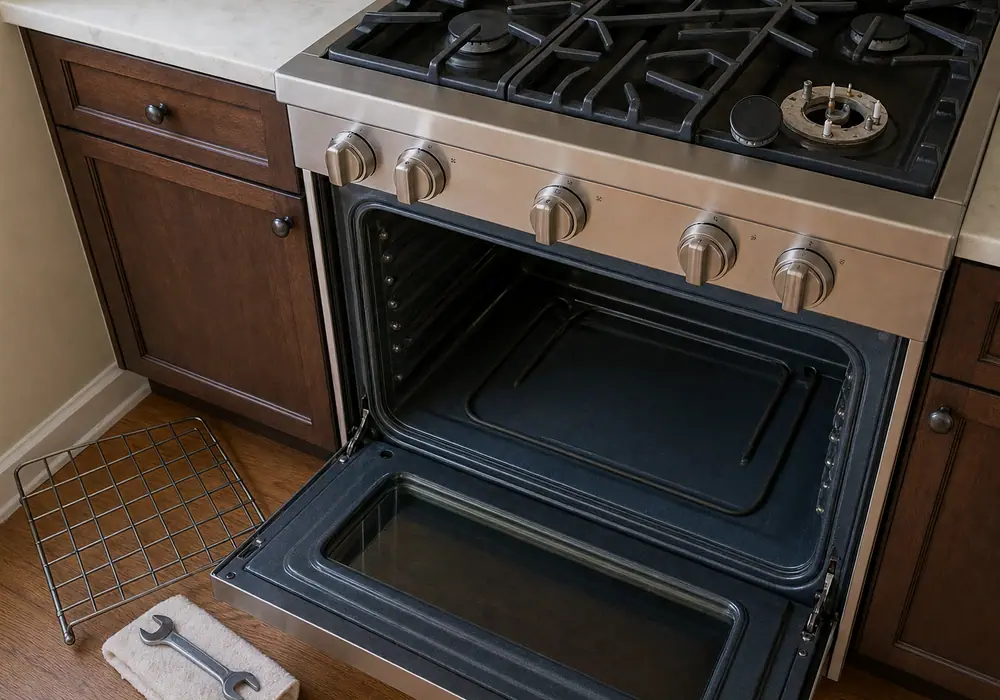
The coast adds its own wear on the cooking side. In kitchens near the water at Capistrano Beach and along the San Clemente shoreline we find more corrosion on burner caps, igniter leads and the sheet metal under the range top than we do inland, and a burner that clicks without lighting is often a cap sitting a hair out of position on a corroded base rather than a failed spark module. Heavy professional oven doors are the other recurring job here. The hinges give, the door stops closing square, and the cavity loses heat past the seal all the way down one side. That reads as an oven problem and it is a hardware problem.
If that matches what yours is doing, say so when you call — it decides which parts come on the van.
There was a whine behind the grille that climbed through the afternoon and went quiet by evening. Condenser fan, worn out from the summers we get out in Ladera Ranch. He had one on the truck and the kitchen is silent again.
Frost kept coming back in the freezer column two weeks after I had cleared it out by hand. He ran a strip of paper round the door first and found the seal slack down one side, which he reckons the damp mornings here are hard on. New gasket sorted it.
Our old Viking would light second time when the kitchen was already warm and refuse completely first thing in the morning. He measured what the igniter was actually drawing rather than just looking at it glow, and that was that. Cleaned up a corroded burner cap too.
Appliance down in Orange County?
Tell us the brand and what it is doing — we can usually name the likely repair before we arrive.
Questions
Answers before you call
Does the salt air near the harbor and the pier really change what breaks?
It changes what fails first. Marine air lays salt on the aluminum condenser fins, which corrode and close up from the inside, so a coil that looks clean passes a fraction of the air it was built for. The refrigerator side, with less margin, drifts each afternoon while the freezer carries on. Grille screws seize and fan hubs hum. Inland the coil only gets dusty.